Download the Conference Proceedings
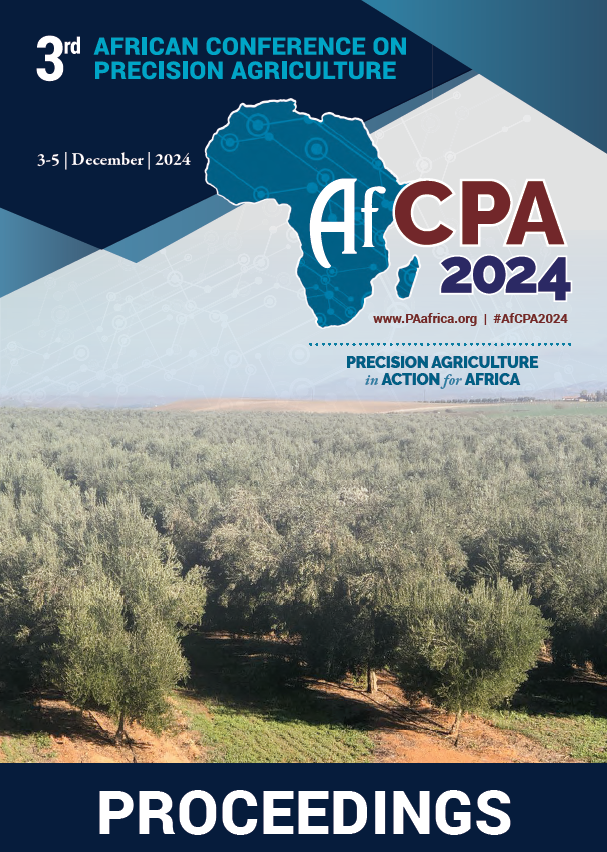
Proceedings
Authors
| Filter results3 paper(s) found. |
|---|
1. Preparation of a precision ripping plan using manual vertical penetrometer measurementsLarge weight power engines and tools used in agriculture significantly contribute to the formation of compacted and thickening layers starting from the soil surface. There are suitable deep ripping technologies to eliminate harmful soil compaction, which are extremely energy and cost demanding. In precision agriculture, it is possible to treat spatially delimited unfavourable soil patches. The bulk density (g/cm3) of the soil was calculated from the soil resistance and moisture content... T. Rátonyi, P. Ragán, A. Széles, P. Fejér, E. Harsányi, I. Bácskai |
2. A cheap alternative to data management and creating of yield maps of small-plot field experimentsLong-term field trials provide an opportunity to examine the long-term effects of crop production factors and the effect of different crop years can also be analysed. In the long-term field trial, spatial representation of the data belonging to each plot might be necessary for the purpose of soil heterogeneity analysis, working hypothesis, or even presentation. Researchers dealing with long-term field trials usually store the measurement data for a given experiment in Excel or in a database of... P. Ragán, T. Rátonyi, A. Széles, P. Fejér, I. Bácskai, E. Harsányi |
3. Soil mapping with the VERIS U3 soil scanner in a precision farm in HungaryCurrently, field crop production faces constant challenges. Extreme climatic conditions, deteriorating circumstances on the field have a negative impact on the quantity and quality of available yields, and the ever-changing agro-economic environment makes the profitability of the sector uncertain. Precision crop production means site-specific agricultural cultivation tied to geographical coordinates. Modern strip tillage technology based on precision technology for crops with wide row spacing... P. Ragán, E. Harsányi, T. Rátonyi, A. Széles, P. Fejér, I. Bácskai |