Download the Conference Proceedings
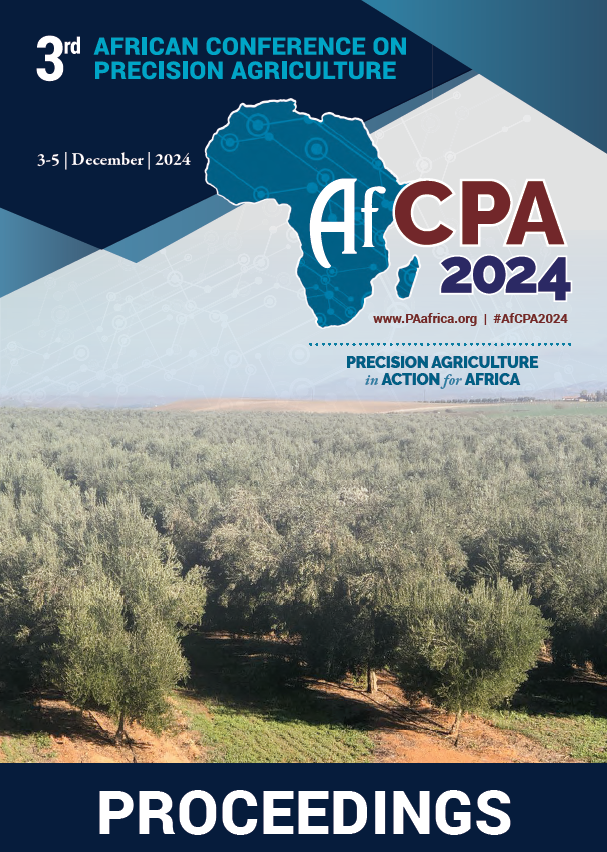
Proceedings
Authors
| Filter results14 paper(s) found. |
|---|
1. Mechanisation of smallholders in Zambia by agrodealer developmentThe main challenges hampering agricultural mechanization in sub-Saharan Africa (SSA) are affordability, availability, lack of farmer skills and constraints within the private sector. Smallholders are trapped in a vicious circle of low income, low demand, high cost, and lack of financing. Low capacity and lack of support for mechanisation contractors (agrodealers) to succeed is holding back the development. The objectives of this work were (i) to assess the affordability of mechanisation systems... S. Peets, S. Woods |
2. The Vision of Future Earth Observation for AgricultureThe main objective of EO4AGRI is to catalyze the evolution of the European capacity for improving operational agriculture monitoring from local to global levels based on information derived from Copernicus satellite observation data and through exploitation of associated geospatial and socio-economic information services. EO4AGRI assists the implementation of the EU Common Agricultural Policy (CAP) with special attention to the CAP2020 reform, to requirements of Paying Agencies, and... K. Charvat, V. Safar, H. Kubickova |
3. Using Site-Specific Management Zones for Potato Crop Management, East Nile Delta, EgyptThe field management zones (MZ) delineated using soil electrical conductivity (EC) and topographic parameters are the basis for site-specific crop management (SSCM). The objective of this paper was to delineation site-specific management zones of 155 feddans (67.2 ha) of a potato pivot field at East of Nile Delta, Egypt for use in smart farming based on spatial variability of soil and plant properties, yield and topographic attributes. The salinity measurement in the field... A.B. Belal, E.S. Mohamed, M.E. Jalhoum, M. Zahran, M.A. Abdellatif, M.S. Emam, E.A. Hendway |
4. Irrigation Water Management for Potato crop under Pivot Irrigation System using Remote sensing techniquesWhen water application records low efficiency, the water losses increased. Irrigation systems often ignore soil variability and water applied uniformly on the field; hence, the water losses amplified. Which means more water application, more energy demand, and more money expenses. El-Salhia region contains a big agricultural farm located at the South Eastern of Nile delta. The field NO 34 was chosen to be investigated under the pivot central sprinkler irrigation system which cultivated with... |
5. Determinants of the adoption of an intelligent monitoring system and effects on farms performance in TunisiaConcidering the observation of the rise of Computerized Management Software Packages and intelligent monitoring in a path of modernization of agricultural techniques, we questioned the main factors influencing the decision to adopt management software, farmers’ perception of these management tools and their impact on farm performance. Referring to a theoretical framework focused on innovation and the adoption of technologies in agriculture, we triggered the hypothesis of research... J. Ben Nasr, H. Chiboub, M. Msaddak |
6. Mapping African soils at 30m resolution - iSDAsoil - Western Time Zones“iSDAsoil” combines remote sensing data and other geospatial information with carefully stratified point samples subjected to spectral analysis and traditional wet chemistry reference analysis. State of the art machine learning techniques were used to create digital maps of 17 agronomically important soil properties at 3 depths, including estimates of uncertainty. iSDAsoil is designed to encourage sharing and we hope that the owners of other soil and agronomic data, in industry... J. Crouch, K. Shephard, M. Miller, J. Collinson, P. Singh, P. Pypers, R. Van Den Bosch, C. Van Beek, M. Chernet, S. Aston |
7. On-farm experimentation. A major role for precision agriculture in African agricultureIs precision agriculture relevant to African Ag? Most people envision fancy technology when they consider precision agriculture (PA). Indeed, over the past 30 years or more PA has introduced a range of exciting technologies to agriculture. But the real change is not the technology itself, but the new ways technology enables farmers to manage complex and uncertain systems. This message dates back to the early days of PA but has been superseded by technological prowess and needs to be... S. Cook |
8. Mapping African soils at 30m resolution - iSDAsoil - Eastern Time Zones“iSDAsoil” combines remote sensing data and other geospatial information with carefully stratified point samples subjected to spectral analysis and traditional wet chemistry reference analysis. State of the art machine learning techniques were used to create digital maps of 17 agronomically important soil properties at 3 depths, including estimates of uncertainty. iSDAsoil is designed to encourage sharing and we hope that the owners of other soil and agronomic data, in industry... C. Van Beek, M. Chernet, S. Aston, M. Miller, J. Collinson, K. Shephard, J. Crouch, T. Terhoeven-urselmans |
9. An Open Source Multispectral Camera for Crop MonitoringPrecision agriculture is one of the most important economic issues of the 21st century because it will make it possible to respond to the new challenges of agriculture, which are population growth, global warming, global epidemics, and inflation, to name a few. Remote sensing makes it possible to monitor the plantation from a distance and makes it possible to know the level of growth and the state of health and hydration of the plants. This paper outlines an affordable and open-source multispectral... H. Nardjes, M. Yagoubi |
10. A Time Series Investigation to Assess Climate Change and Anthropogenic Impacts on the Degradation of Nile Delta, Egypt.Land degradation risk, status and rate in Nile Delta, Egypt were assessed for a time series using remote sensing data over the past five decades using TM, ETM and OLI. Quantitative deterioration of the area was produced based on the comparative study approach in the integrated weighted sum, weighted overlay and fuzzy model. Where degradation factors were compiled in a raster and each data set scored on a 1 to 5 (very low, low, moderate, high and very high scale). The data sets were then weighted... B. Abdellatif, M.R. Metwalli, M.M. Metwaly, M.A. Abdelrahman |
11. Drivers of Post-harvest Aflatoxin Contamination: Evidence Gathered from Knowledge Disparities and Field Surveys of Maize Farmers in the Rift-valley Region of KenyaMaize-dependent populations in sub-Saharan Africa are continually exposed to aflatoxin poisoning owing to their regular consumption of this dietetic cereal. Being a staple in Kenyan households, consumption of maize-based meals is done almost daily, thereby exposing consumers to aflatoxicoses. This study assessed awareness levels, knowledge disparities and perceptions regarding aflatoxin contamination at the post-harvest phase among farmers in the Rift-valley region of Kenya. Households were randomly... G.W. Gachara, R. Lahlali, R. Suleiman, B.M. Kilima |
12. Mapping the Spatial Variability, Status and Magnitude of Soil Acidity in Semen Ari District of South Omo, Southwestern EthiopiaSoil acidity is one of the major constraints to cropping systems in the vast highlands of Ethiopia. A common strategy for ameliorating soil acidity is the application of agricultural lime. However, formulation of measurement strategy was hampered by the lack of information on magnitude, extent and status of soil acidity and, high resolution soil acidity map. Therefore, this study was investigated to assess the magnitude and status of soil acidity, map its spatial variability in Semen... A.H. Hemacho |
13. Evaluating Soil Organic Matter Under a No-Till System Using Digital Sensors (EM38 and MSP3)Agriculture, especially in no-till systems, plays a crucial role in ensuring global food security. The pressure on agricultural lands due to a growing population and climate change necessitates innovative solutions. Proximal soil sensing using electromagnetic induction (EMI) and electrical conductivity (ECa) sensors has gained prominence. These technologies provide rapid, non-destructive measurements of soil properties, offering advantages over remote sensing and laboratory analyses. In... H. Hajjaj, K. Ibno Namr, E. Abdellah , C. El Khalfi |
14. The Value and Potential of On-Farm Experimentation to Catalyze Agricultural TransformationOn-farm experimentation (OFE), which inculcates farmers’ agency in knowledge discovery, has the potential to support and accelerate transformative agronomy at scale. The OFE process within the Nutrient-Catalyzed Agricultural Transformation in Africa (NUTCAT) project, encompasses farmer engagements, set-up of simple, easy-to-understand treatment designs, and contextual analysis of the data to enhance the relevance of the results to farmers. Ultimately, it is envisaged that this process will... I. Adolwa, J. Muthamia, C. Lutomia, , S. Cook |