Download the Conference Proceedings
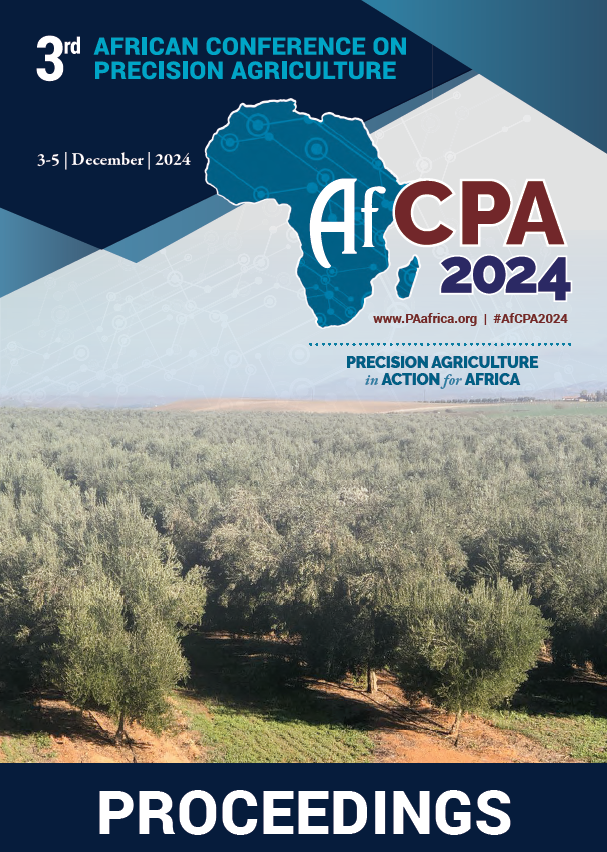
 
Get your copy of the 2024 African Conference on Precision Agriculture Proceedings today! Download the PDF file and view all of the available proceedings.
AfPCA Proceedings 2024

Proceedings

Find matching any: Reset
Precision Agriculture for Field and Plantation Crops
Climate Smart Agriculture
Adoption of Precision Agriculture
Robotics, Automation, and Small Farm Mechanization
Precision Agriculture for Small Holders
Adoption of Precision Agriculture
Keynote
Add filter to result:
Authors
ALE GONH-GOH, A
Abdellah, E
Abdellah, E
Abdellatif, M.A
Abuli, J
Achigan-Dako, E.G
Achigan-Dako, E.G
Adeboye, M.K
Adekoya, F
Adekoya, F.J
Adolwa, I
Aduaramigba, V
Aduramigba, V.M
Aduramigba-Modupe, V
Agneroh, T
Aidara, O
Amao, P.A
Aminu, R.O
Amouzou, K
Amouzouvi, K.A
Amouzouvi, K.M
Amujoyegbe, B
Aphing, N
Azeez, T.A
Azonhoumon, L.W
BROU, C
Bakirdjian, E
Baram, S
Basil, E.C
Basil, R.T
Belal, A.B
Beryozkin, A
Bonnardel, B
CHEHBOUNI, A
Cabaraux, J
Chebli, Y
Chemiming'wa, G
Chemining’wa, G.N
Chentouf, M
Coulibaly, O.N
Crouch, J
Cursoli, G
Denton, O
Dhiba, D
Diro, S
Dossa, B.M
Egeru, A
Ekhator, F
El Otmani, S
Emam, M.S
Engoke, C
FASSINOU HOTEGNI, V
Fassinou Hotegni, N.V
Fletcher, D
Fulton, J
GUEMOURIA, A
Gebeyehu, S
Gebrekidan, B.Z
Gitau, M
Gnanglè, L.M
Godonou, Y.L
HARKANI, A
HOUMAIRI, H
Harigaya, T
Hendway, E.A
IBN EL MOKHTAR, F
IDRISSI, O
IKEBE, M
Ikuenobe, E.C
Jalhoum, M.E
Jimoh, S.O
KHECHBA, K
KRIMIBENCHEQROUN, S
Kamau, J.W
Karanja, M.M
Khosla, R
Kinama, J.M
Kioko, W
Kioko, W
Kioko, W
Kioko, W
Kitonyo, O
Kitonyo, O
Kitonyo, O.M
Kolani, L
Kouassi, H
LAAMRANI, A
LARE, M
LARE, M
LARE, M
LEE, J
LOTSI, K
Lacoste, M
Lawal, B
Linker, R
MATUMURA, I
MORIMOTO, E
MOUHAMADOU, L
MUGI, E
Madukwe, K.D
Majaliwa, M.J
Majumdar, K
Misbah, K
Mohamed, E.S
Moi, P.E
Molin, J
Murori, R
Mutegi, J
NONAMI, K
Nigussie, A
Njoroge, S
Nyikal, R.A
OKAFOR, B.N
OKAFOR, B.N
Ogunsola, O.A
Ohana, N
Oke, A.O
Okoye, N.M
Ortiz, B
Osayande, P.E
Osia, M
Oyedele, D
Ozou, K.E
Paz-Kagan, T
Peets, S
Rave, E
Rodrigues, F
SATO, S
SOGBEDJI, J
SOGBEDJI, J
SOGBEDJI, M.J
Sitienei, R
Sogbedji, J
Sogbedji, J.M
Solomon, S
Terhoeven-Urselmans, T
Termin, D
Tsado, P.A
WILLIAM, K
Woods, S
Yamungu, A.B
Zahran, M
Zhu, J
Zingore, S
Topics
Adoption of Precision Agriculture
Precision Agriculture for Small Holders
Adoption of Precision Agriculture
Precision Agriculture for Field and Plantation Crops
Keynote
Climate Smart Agriculture
Type
Oral
Poster
Year
2024
2020
2022
Home » Topics » Results

Topics

Filter results47 paper(s) found.

1. Maximisation de l’efficience d’utilisation de l’azote par la tomate(Solanum lycopersicum L.) sur les ferrasols au Sud du Togo

Maximiser l'efficience d'utilisation de l'Azote (N) en culture de tomate s'impose pour améliorer le rendement et la rentabilité de la culture. Il a été mené sur trois ans, six cultures de tomate réparties sur deux périodes (septembre à janvier 2017-2019 et de février à mai 2018-2020) sur un sol ferralitique à la Station d'Expérimentations Agronomiques de Lomé suivant un dispositif ex... M. Lare, M.J. Sogbedji

2. Mapping of soil nutrients variability in some plantation crops in Abeokuta, Ogun State Nigeria.

The activities of man on the soil and the undulating topography have great effects on soil nutrients variability. For near accurate application of nutrients in precision agriculture in order to reduce wastage of resources, this research was conducted to acquaint the research farm of the institute with the nutrient variability at specific locations. A detailed soil survey was carried out at the Teaching and Research Farms of the Federal University of Agriculture, Abeokuta, Ogun State Nigeria. ... E.C. Basil, R.T. Basil

3. Evaluation of on –farm oil palm yield parameters in Niger Delta region of Nigeria

Evaluation of on –farm oil palm yield parameters in Niger Delta region of Nigeria   *Ekhator F1., Osayande P1.,  Aduramigba-Modupe V.O2., Solomon O1., and  Ikuenobe C.E1. 1Nigerian Institute for Oil Palm Research (NIFOR) P.M.B 1030, Benin City, Edo State 2Institute of Agricultural Research and Training, Obafemi Awolowo University, Ibadan, O... E.C. Ikuenobe, K.D. Madukwe, F. Ekhator, V.M. Aduramigba, P.E. Osayande, S. Solomon, N.M. Okoye

4. Development of Canopy Mapping System of Asian pears (Pyrus pyrifolia Naka) Using Terrestrial Laser Scanning

In this paper, the canopy mapping system (CMS) of Asian pears for estimating yield during Bud thinning and Pruning operations using point cloud data was proposed. Bud thinning and Pruning in Asian pear (Pyrus pyrifolia Naka) is necessary to ensure quality and yield but is time-consuming and heavily depends on work knowledge. This study described a method of estimating the number of fruits through the length of a branch based on remote sensing. The CMS would be useful to support more efficient... E. Morimoto, J. Lee, K. Nonami, I. Matumura, M. Ikebe, S. Sato

5. USE OF DRONE IN PRECISION AGRICULTURE IN SENEGAL

In Senegal more precisely in the valley of the Senegal River, we have introduced drones for use in precision agriculture. These Drones are used in phytosanitary treatment and fertilizer spreading. Thus we also test in the monitoring of plots, in particular to detect deficiencies in fertilizer, stresses and diseases. We have started with some producers in the treatment of rice plots with post-emergence herbicide and the results have been satisfactory, even going as far as a reduction in the do... O. Aidara

6. La fertilité indigène du sol : un élément catalyseur de l’agriculture de précision

Dans le contexte actuel de la dégradation des ressources naturelles et des problèmes de disponibilité et d'accessibilité des intrants agricoles, l'agriculture de précision dont le point d'entrée est la connaissance de la fertilité endogène du sol s'impose. Des essais soustractifs ont été conduits pendant deux ans (2018-2019) à la Station d'Expérimentations Agronomiques de l'Univers... K. William, J. Sogbedji, M. Lare

7. EFFECT OF INTERCROPPING SORGHUM WITH COWPEA AND NITROGEN APPLICATION ON GROWTH AND YIELD OF SORGHUM (Sorghum bicolor (L.) MOENCH)

Despite the development of improved varieties, the yield of sorghum has remained significantly low in dryland environments due to low soil fertility and inappropriate cropping practices. However, implementation of precision agriculture (PA) within the context of companion cropping with legumes and fine-tuning the supply of fertilizer nitrogen (N) has the potential to increase sorghum yield in these environments. Nonetheless, the effect sorghum-cowpea compatibility, fertilizer N use and their ... P.E. Moi , O.M. Kitonyo, G.N. Chemining’wa, J.M. Kinama

8. Effect of Plant Population and Nitrogen Rate on Growth and Yield of Two Pre-release rice varieties in Kenya

The application of precision agriculture (PA) through the optimization of plant population and management of fertilizer nitrogen (N) can increase rice yield. Current rice (Oryza sativa) plant population and fertilizer nitrogen (N) management guidelines in  Kenya were developed from research conducted about three decades. These management guidelines might still be robust and could be applied to recently released as well as close-to- release varieties. However, the yield potential o... W. Kioko, W. Kioko, W. Kioko, W. Kioko, O. Kitonyo, G. Chemiming'wa, S. Gebeyehu, R. Murori

9. Performance agronomique et économique de différentes stratégies de gestion de la fertilité du sol sous culture de soja (Glycine max L. Merril) dans la zone littorale du Togo.

Ce travail a pour objectif de valoriser les émondes de deux légumineuses arbustives et quelques fertilisants organiques pour améliorer la production du soja. Afin de parvenir à cet objectif, les paramètres comme la masse de mille graines, les rendements en gousses, en graines, en fanes du soja et autres ont été déterminés. L’étude a eu lieu à la Station d’Expérimentation Agronomique de Lomé ... K.M. Amouzouvi, K.E. Ozou, L. Kolani, K.A. Amouzouvi, J.M. Sogbedji

10. The Yield Gap In Africa: Closing the gap through soil attributes management using remote sensing & Precision Agriculture Approaches at the field scale

In Africa, which has the most population growth in the world, the agricultural system is characterized by the predominance of smallhoder farmers. In order to cope with intense population growth and increased production costs through yield gap closing. Yield gap is defined as the difference between potential yield and actual yield and is an inevitable method to improve yields while decreasing the environmental impacts of agricultural systems. The variability of yields is strongly controlled by... K. Khechba, A. Laamrani, A. Chehbouni, D. Dhiba, K. Misbah

11. Using Remote Sensing to Develop Site-Specific Nitrogen Management in Citrus Orchards

Integrating multivariate spatial analysis with the delineation of site-specific management zones (MZ) provides a basis for practical and cost-effective management of water and nitrogen (N) fertilization in precision agricultural (PA). In many crops, measurements of leaf N content are used to assess the plant’s nutritional status and to develop fertilizer application plans for optimal yields. Accordingly, the aim of this study was to develop leaf N content prediction for citrus based on ... E. Rave, N. Ohana, R. linker, D. Termin, A. Beryozkin, T. Paz-kagan, S. Baram

12. Fertilizer Micro-dosing on Growth and Vegetative Yield of Fluted Pumpkin (Telfairia occidentalis Hook. f)

The study evaluated growth and vegetative response of fluted pumpkin (Telfairia occidentalis Hook. f) to levels and time of micro-dosing Urea fertilizer. The experiment was conducted in two growing seasons of late and early cropping seasons of 2017 and 2018 respectively at the Teaching and Research Farm of Obafemi Awolowo University. The experiment was a factorial laid out in a Randomized Complete Block Design (RCBD) with four replications involving seasons, levels of fertilizer (0, ... P.A. Amao, B. Amujoyegbe, D. Oyedele

13. Mapping of micronutrients status in soils under multivarietal Citrus sinensis production for precision agriculture

Citrus production in Nigeria is below the world average; and this is caused among other things by poor soil management. The situation is further acerbated by blanket fertilizer application and low application of precision in soil fertility management. A study was carried out on a 34 year old multi varietal citrus orchard under sweet orange (Citrus sinensis) to determine the current soil fertility status and variability of micronutrients. Soil samples were collected at a sampling dept... B.N. Okafor, B.N. Okafor, V. Aduaramigba, O. Denton

14. Decision Support System in Agriculture

Descriptive integrated models for water resource management are not limited to hydrological variables, but integrate environmental socio-economic subsystems and study the interactions and feedbacks between the various interacting subsystems.    Agriculture is a major water resource management sector that takes economic factors into account.    In dynamic system models, we try to look for the optimal economic policies to achieve sustainability by introdu...

15. Caractérisation architecturale pour la prédiction du potentiel de production des tètes de clones de Coffea Caenophora pierre ex a. froehner

Le café demeure jusqu’à ce jour une culture très importante dans le monde et particulièrement en Côte d’Ivoire. Cette culture est avec les changements climatiques confrontée à de nombreux facteurs qui limitent sa production. Parmi ces facteurs les plus problématiques sont : la baisse de la fertilité des sols, les insectes et les performances agronomiques de l’espèce et/ou de la variété cu... H. Kouassi

16. SIMULATION OF CASSAVA YIELD UNDER DIFFERENT CLIMATIC SCENARIOS IN KILEMBWE, SOUTH-KIVU PROVINCE EASTERN DR CONGO

Climate variability and change are projected to significantly impact agricultural production across Africa. This study assessed the effects of climate variability and change on cassava yield in Kilembwe, South-Kivu province Eastern DR Congo. The assessment relies on the DSSAT crop model simulation of cassava under current and future climate. The period 1980–2010 was used to represent the baseline, while future projection covers three periods including the near future (2010–2039), ... A.B. Yamungu, A. Egeru, M.J. Majaliwa, B.M. Dossa

17. The roles of key public services on the adoption of climate-smart agricultural technologies in coffee-based farming system of Ethiopia

Many studies focused on the adoption studies of relatively expensive technologies such as improved varieties, inorganic fertilizers, and agricultural machines. However, limited empirical studies have been conducted on the adoption of improved agricultural practices such as intercropping, manure application, crop rotation with leguminous crops and forages, conservation tillage, and soil and water management practices which are tremendously important for climate change adaptation and mitigation... S. Diro

18. Changes in climatic factors lead to the change in cultural wedging of rice in the Ivorian pre-forest zone

Climate change in the pre-forest zone of Cote d'Ivoire has led to a mismatch between cropping periods and new seasons, challenging the sowing periods usually recommended for rainfed rice cultivation in this area. Our study aims to determine the optimal sowing period for two rainfed rice varieties cultivated in this pre-forest zone of the country. The agroclimatic analysis carried out over the period 1980-2017 allowed to determine the optimal dates for sowing ri... C. Brou

19. Digital platforms for boosting farmer knowledge: Two case studies in Kenya and Uganda

Approximately 80% of all farms in Africa, or 33 million farms, are two hectares or less in size. Many of these smallholder farmers do not have access to resources, including extension services, to improve their farms. Lack of knowledge of Good Agronomic Practices (GAPs) causes farmers to fail to reach their full yield potential. Extension workers responsible to provide these GAPs to farmers are spread thin. For example, as of March of 2019, there was one extension worker for every 1,800 coffe... E. Bakirdjian, T. Harigaya, M. Osia, J. Zhu, J. Abuli

20. Mapping African soils at 30m resolution - iSDAsoil: leveraging spatial agronomy in farm-level advisory for smallholders

Field level soil data has been the foundation of agronomic advisory, but traditional methods involving on-farm sampling are too expensive for a large proportion of African smallholders. Building on the work of the African Soil Information Service (AfSIS), Innovative Solutions for Decision Agriculture (iSDA) and partners have created an agronomic soil database which covers the entire African continent at a spatial resolution of 30 m. “iSDAsoil” combines remote sensing data and othe... J. Crouch

21. Mechanisation of smallholders in Zambia by agrodealer development

The main challenges hampering agricultural mechanization in sub-Saharan Africa (SSA) are affordability, availability, lack of farmer skills and constraints within the private sector. Smallholders are trapped in a vicious circle of low income, low demand, high cost, and lack of financing. Low capacity and lack of support for mechanisation contractors (agrodealers) to succeed is holding back the development. The objectives of this work were (i) to assess the affordability of mechanisation syste... S. Peets, S. Woods

22. Spatial variability and mapping of selected soil quality indicators for precision farming at a smallholding level in Minna, Nigeria

Smallholding farmers in Nigeria still practice blanket application of fertilizers, without giving consideration to spatial variations in soil properties across their fields. Understanding of spatial variability in soil properties is essential for precision farming, especially in this era of resource scarcity and high cost of fertilizers. This study was carried out to assess and map the spatial variability in selected soil quality indicators in a smallholder farm in Minna, North-central Nigeri... B. Lawal, M.K. Adeboye, P.A. Tsado

23. FARMER CHARLIE: PRECISION AGRICULTURE AT SMALLHOLDER FARMERS’ SERVICE

Preliminary research and an ongoing project in Nigeria showed that agriculture is a crucial activity in the country. It is mainly carried out in small, family-owned farms: in fact, 88% of Nigeria farmers work on less than 0.5 ha. Lack of resources, of readily available information and the impact of climate on agricultural activities lead to low yields and high-cost farm inputs (FAO, 2020). The availability of agricultural data and weather forecast information could play an essential role in i... B. Bonnardel, G. Cursoli

24. Using Site-Specific Management Zones for Potato Crop Management, East Nile Delta, Egypt

The field management zones (MZ) delineated using soil electrical conductivity (EC) and topographic parameters   are the basis for site-specific crop management (SSCM). The objective of this paper was to delineation site-specific management zones of 155 feddans (67.2 ha) of a potato  pivot field at East of Nile Delta, Egypt for use in smart farming based on spatial variability of soil and plant properties, yield  and topographic attributes. The salinity measurement in the f... A.B. Belal, E.S. Mohamed, M.E. Jalhoum, M. zahran, M.A. Abdellatif, M.S. Emam, E.A. Hendway

25. Scaling Precision Agriculture in West Africa Smallholder Irrigation and Water Management Systems

The advent of precision agriculture (PA) is changing global agricultural productivity; through the underlining principles that ensure inputs required for the management of soil, water and crop agronomy are supplied precisely across the field landscape resulting in optimum yield. The benefits of PA include improved food security through increases in water and nutrient use efficiency, and timely management of good agricultural practices. The practice of PA could be beneficial across commercial ... A.O. Oke, V. Aduramigba-modupe

26. Potential precision agriculture practices for higher fruit and vegetable production in West Africa: A Review

During the last decades, efforts have been made to increase the yield and the quality of major fruits and vegetables but still, farmers mainly those in West African countries are struggling to close the yield gap. Precision agriculture has been reported in most developed countries as a set of tools integrating information and technologies for efficient crop production. Over the decades, scholars have been skeptical about the development and implementation of precision agriculture in West Afri... V. Fassinou hotegni, L.W. Azonhoumon, E.G. Achigan-dako

27. Deep Learning is bringing pan-African small holder advisory services based on mid-infrared spectroscopic soil analysis to the next level

The majority of African smallholder farmers do not have access to soil analytical services. The main reasons are relatively high costs of wet chemical services and difficult logistics. As a result they have to rely on blanket fertilizer recommendations. This often causes poor soil management due to very heterogeneous soil conditions. As a result, the return on investment from blanket fertilizer recommendations is low and fertilizer acceptance is not growing among smallholder farmers. Soil spe... T. Terhoeven-urselmans, D. Fletcher, M.M. Karanja, J.W. Kamau

28. Scale Independent Precision Agriculture

The advent of precision agriculture that occurred in the USA about three decades ago involved application of advanced and innovative technologies. Precision agriculture in the US and other advanced countries continued in that direction and today it is more sophisticated and complex than before.  Interestingly, the concept of Precision Agriculture is relatively simple and does not mandate utilization of advanced technologies to practice precision agriculture. For example, it may take a su... R. Khosla

29. The AgroCard-Côte d’Ivoire project

Le secteur agricole fait désormais partie des secteurs d’activités de précision. Face à l’amenuisement des ressources et les besoins sans cesses croissants en produits agricoles, l’agriculture de précision qui était jusque-là réservée aux grandes firmes agro-industrielles, s’impose aujourd’hui aux plus petits producteurs. Cependant, les matériels restent, pour la plupart, conçus pour la ... N. aphing

30. Engaging Stakeholders in Precision Agriculture Toolbox Conception: Case of Cowpea Atlas Platform Establishment in Benin Republic

Cowpea [(Vigna Unguiculata (L.) Walpers] is among the most preferred and consumed legumes in West Africa and grown by many smallholder farmers. The crop has huge potential, is easy to grow and constitute a source of income of many actors involved in different value chains. Unfortunately, despite many interventions which aimed at promoting the crop in West Africa mainly Benin, areas under cowpea crop decrease over the years along with the loss of cowpea-based products. Such problem is... N.V. Fassinou hotegni, Y.L. Godonou, L.M. Gnanglè, O.N. Coulibaly, E.G. Achigan-dako

31. Adoption of Precision Agriculture Technologies in Ethiopian Agricultural Contexts

In the coming decades, world agriculture will need to under-go a major transformation to meet the future demands of a growing population. Adoption of precision agriculture by smallholder farmers is still at a nascent stage and is limited by several factors. Smallholder farmers suffer from low farm productivity and yields as well as lack of access to inputs, credit, and markets; the lack of digital infrastructure like Internet and electricity; lack of awareness and digital skills among farmers... B.Z. gebrekidan

32. Analyse De La Variabilité Spatiale Des Rendements De Maïs (Zea Mays L.) Dans Les Régions Des Savanes Et Centrale Du Togo

L'agriculture de précision s'impose au Togo. Une étude a été menée dans 5 préfectures du Togo, dont 2 dans la région des Savanes (Oti et Kpendjal) et 3 dans la région Centrale (Sotouboua, Tchamba et Tchaoudjo) avec un total de 20 producteurs en 2021. d'analyser la variation spatiale du rendement en grain du maïs (variété Ikenne) au sein de chaque région sous deux pratiques de gestion agricoles inclua... M. Lare, J. Sogbedji, K. Lotsi, K. Amouzou, A. Ale gonh-goh, A. Agneroh

33. Variability in Yield Response of Maize to N, P and K Fertilization Towards Site-specific Nutrient Recommendations in Two Maize Belts in Togo

Les régions de savane et du centre sont les principales zones de production de maïs au Togo, mais avec des rendements en grains de maïs à un seuil de seulement 1,5 Mg ha -1 . Nous utilisons une approche participative pour évaluer l'importance des trois principaux macro-éléments (N, P et K) pour la culture du maïs dans les deux régions afin de permettre davantage de recommandations d'engrais spécifiques au site ... J. Sogbedji, M. Lare

34. Using Precision Technologies to Monitor the Grazing Activities of Goat in a North African Woodland

In the north of Africa, browsing on natural pastures is the main source of feed for domestic goats. Livestock farming, particularly grazing goats, constitutes the prevalent agricultural activity in the mountainous areas of Morocco. Data on animal behavioral activities are essential for understanding their feeding and their interaction with the environment in order to define the optimal management intervention strategies. The recent development of precision farming technologies and the increas... Y. Chebli, M. Chentouf, J. Cabaraux, S. El otmani

35. New Trends in Precision Agriculture Management: Africa Perspective

The ever-increasing human population in Africa demands a corresponding increase in food and fiber production. Although Africa has the 12th highest population growth rates in the world which may double by 2050, food productivity in the region has remained low. A critical challenge facing crop production in Africa is low awareness of precision agriculture (PA) and low soil fertility in many agroecosystems. Available studies show that digital technology is transforming the agricultural sect... V. Aduramigba-modupe

36. Farmers’ Perception and Willingness to Adopt Drone Technology in Agriculture

The application of drones, Unmanned Aerial Vehicles (UAVs), in agriculture has led to a paradigm shift in farming practices by reducing production costs and increasing operational efficiency and profitability. However, there is a lack of empirical reports on the efficiency and profitability of UAV application to agriculture in Nigeria, limiting the contribution of Nigerian agriculture to the global scientific discourse on drone technology and advancement. This study investigates farmers&rsquo... F.J. Adekoya, S.O. Jimoh, O.A. Ogunsola, T.A. Azeez, R.O. Aminu

37. Remote Sensing: from Plot Towards Landscape Scales

The agricultural research sector is working to develop new technologies and decision support tools to sustainably increase food productivity, ensure global food security and decrease poverty. Precision Agriculture (PA) and specially Remote Sensing (RS) technologies have become more affordable in recent years. Cameras have become more compact and lighter, with improved spectral and spatial resolutions. The use of incoming light sensors allows for images to be automatically calibrated to surfac... F. Rodrigues

38. Tropical Precision Agriculture: the Brazilian Experience

Soils with limited natural fertility and high dependence on imported fertilizers, in addition to intense natural spatial variability, are factors that made Precision Agriculture (PA) develop in Brazil. More than 20 years of academic and business experience have been accumulated, with intense consulting services with business models adapted to local conditions, involving small, medium and large rural properties. Innovations and challenges are still needed in the field of soil fertility managem... J. Molin

39. Harnessing Soil Health to Create More Restorative and Resilient Food Systems in the Central Highlands Eco-Region Foodscape

The relationships among soil health and adoption of regenerative practices, crop productivity, human nutrition and farm profitability are intricate and poorly understood, particularly in the Central Highlands of Kenya. There is a need for a deeper understanding of how soil health is affected by the profitability of preferred value chains among smallholders in this ecoregion. The Central Highlands Ecoregion Foodscape, or the CHEF, which is within the Upper Tana River Basin is centered around f... R. Sitienei

40. Overview of Precision Agriculture Education in North America

Dr. Fulton will present about current educational degree programs and courses being taught in North America on precision and digital agriculture. He will also note feedback from industry on precision agriculture educational needs and where universities are heading with their PA programs. ... J. Fulton

41. Global Renewal and Future of On-farm Experimentation

Experimenting on farm with farmers is gaining momentum as a choice instrument to contribute to addressing global challenges. This presentation will show how the complex histories of field experiments and participatory research are leading toward OFE solutions that are both evidence-based and farmer-centric. Varied communities thread these collaborative innovation pathways, among which those of Precision Agriculture occupy a key position for their ability to leverage scientific rigor, agronomy... M. Lacoste

42. The Role of Smart-Advisory Services in Climate-resilient Agriculture

Crop management is strongly influenced by changes in weather and climate, therefore strengthening resilience and environmental sustainability will require robust advisory services that can support farmers’ decisions. Crop production adaptations to weather, climate variability, and change will need combined efforts from farmers, academia, industry, and government to co-develop solutions, train future workforce not only to advise the farming community but also develop solutions and also e... B. Ortiz

43. Precision Agriculture in Africa; the Youth Are Ready

Precision Agriculture holds enormous potential for Africa’s food security and socio-economic development. With the evolvement of the global agricultural systems and the growing emergence of the Fourth Agricultural Revolution (Agric 4.0), Africa is presented with a huge opportunity to leverage precision agriculture to meet its growing population demands in a sustainable environment. Of course, the growth of precision agriculture practices and tools is not without its challenges. However,... F. Adekoya

44. A Call for Action: Implementing the African Certified Agronomy Advisory Program

Agriculture remains the backbone of many African economies, providing livelihoods for millions while addressing food security concerns. However, productivity in the sector often lags due to various challenges, including limited access to modern agronomic practices and advisory services. In response to the pressing need for enhancing agricultural productivity and sustainability in African countries, it is imparative to establish a standardized extension training program at the continental leve... C. Engoke, S. Zingore, I. Adolwa, S. Njoroge, K. Majumdar, J. Mutegi, E. Mugi,

45. Grain Yield and Nitrogen Uptake of Maize (Zea Mays L.) As Affected by Soil Management Practices and Their Interaction on Cambisols and Chernozem

Although numerous factors contribute to wide yield gaps, low external inputs, particularly N, and poor cropping practices such as soil tillage and monocropping are among the major factors affecting low maize production. In view of this, field experiments were implemented on two sites with Cambisols and Chernozem soil types in two consecutive years to evaluate the impacts of different soil management practices on the grain yield and quality, nitrogen uptake and selected soil properties. A thre... A. Nigussie

46. Effects of Adopting Fertilizer Management Practices on Yield in Maize-Based Systems of Embu County: an Instrumental Variable Regression Approach

Fertilizers play an important role in maize production and global food security, contributing significantly to yield increases. However, continuous rise in fertilizer prices has resulted in inflated costs, leading to unaffordability and suboptimal utilization. Inefficient use by farmers has hindered yield potential and increased environmental risks. Additionally, farmers' limited knowledge and awareness of optimal nutrient requirements, timing, application rates, and  placement techn... M. Gitau, R.A. Nyikal, , O. Kitonyo

47. High-Throughput Field Phenotyping of Ascochyta Blight Disease Severity in Chickpea Using Multispectral Imaging

Ascochyta blight (AB) caused by Ascochyta rabiei (Pass.) Labr. is an important and widespread disease of chickpea (Cicer arietinum L.) worldwide. The disease is particularly severe under cool and humid weather conditions, leading to crop losses at all stages of chickpea growth.  Screening for resistant cultivars remains the most effective, economical and ecological method of disease management. However, traditional phenotyping methods that relying on trained experts are... F. Ibn el mokhtar, S. Krimibencheqroun , , A. Harkani , H. Houmairi , O. Idrissi , E. Abdellah , E. Abdellah